
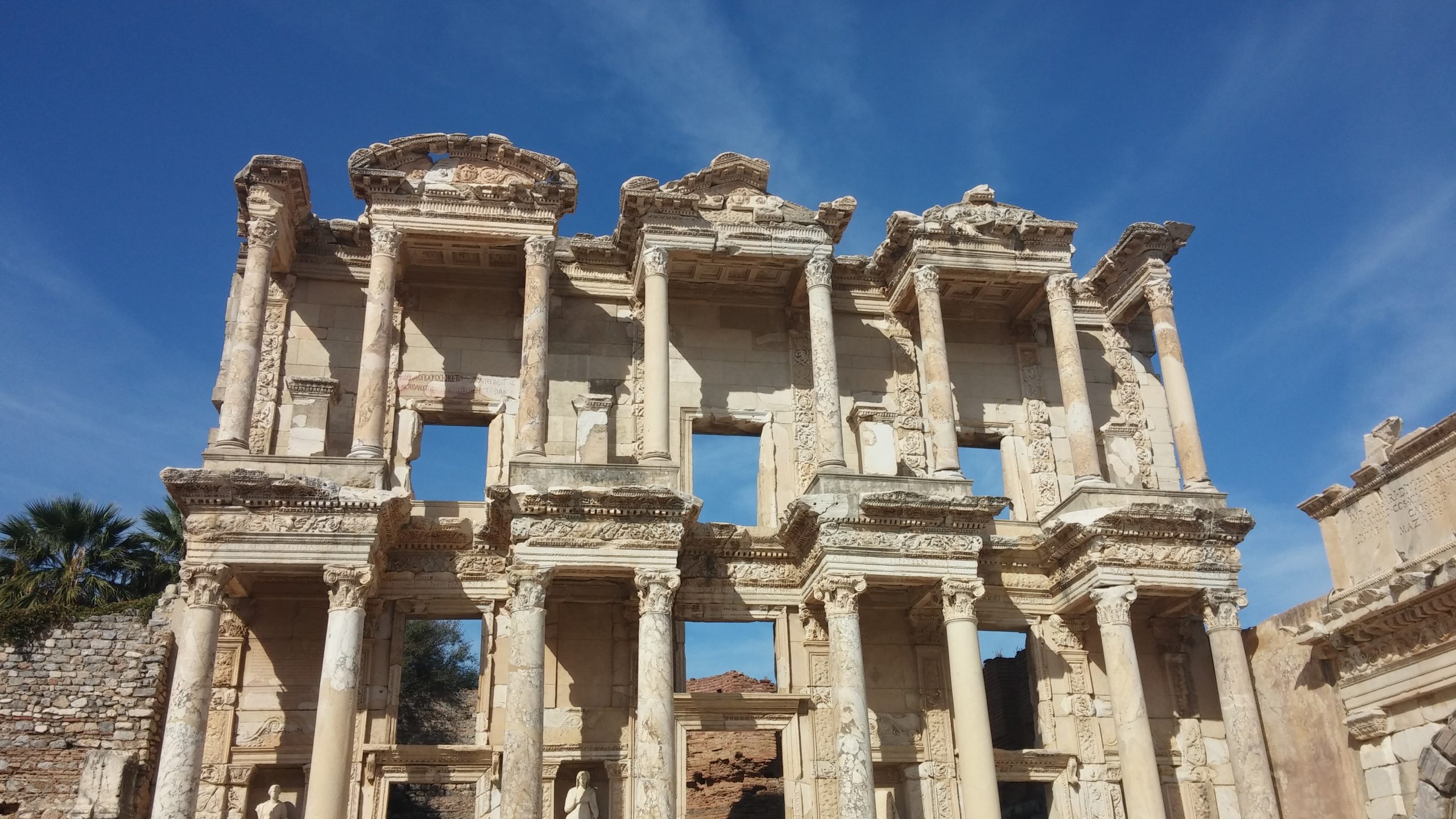
Standing before the magnificent façade of the Celsus Library in Ephesus.Discover the history and secrets of this ancient site with insights from your private archaeologist guide.
Turkey Archaeology Tour Guide: From Göbekli Tepe to Ephesus
Walking through ancient ruins isn’t just about looking at old stones; it’s about listening to the stories of the civilizations that carved them. As an experienced Turkey archaeology tour guide, my passion is to bring these ancient worlds to life for you. A professional Turkey archaeology tour guide is one of the few companions who can truly bridge the gap between past and present, taking you on a deeply engaging journey from the monumental pillars of Göbekli Tepe to the iconic marble streets of Ephesus.
Why Explore Antiquity with an Archaeologist?
Turkey isn’t one “archaeology story.” It’s more like a library with whole floors devoted to different eras. The best tours don’t try to read every book, they choose a theme and give you time to absorb it.
Start by deciding what you want your days to feel like:
Do you want “big-city ruins” and museums? You’ll spend more time on the Aegean coast (Ephesus, Pergamon, Troy), with shorter drives and strong infrastructure.
Do you want origins and early religion? You’ll head to southeast Turkey for Göbekli Tepe and Şanlıurfa museums, where the sites feel rawer and the distances can be longer.
Do you want imperial power and diplomacy? Central Anatolia and the Hittite capital at Hattuşa (Hattusa) are for you, with windswept walls, gates, and a sense of scale.
More itineraries are leaning toward small-group, expert-led formats, especially for routes that include eastern and southeastern Turkey. If you like asking questions and learning in context, look for tours that name the guide’s background (archaeologist, historian, or an experienced local licensed guide with a clear archaeology focus).
Neolithic, Bronze Age, or Greek and Roman classics
Neolithic (Southeast Anatolia): This is the “before cities” chapter. Göbekli Tepe is the headline, but a strong itinerary usually adds Karahan Tepe and the Şanlıurfa museums so the stones aren’t just mysterious shapes. Expect open, exposed sites, big skies, and fewer interpretive signs, your guide matters here.
Bronze Age (Central Anatolia): Focus on Hattuşa, the Hittite capital, with its gates, walls, and temple remains. It’s less polished than Roman sites, but it’s powerful if you like ancient states, treaties, and early empires.
Greek and Roman classics (Aegean and Mediterranean): If you want the “movie set” feeling, this is it. Ephesus, Pergamon, Troy, Aphrodisias, and Halicarnassus (Bodrum) deliver big architecture and clearer street plans.
Rule of thumb for first-timers: pick one main era, then add one “contrast stop” (for example, Roman Ephesus plus Neolithic Göbekli Tepe, or Roman cities plus Hittite Hattuşa).
Must-See Highlights with a Turkey Archaeology Tour Guide
A good route is regional. Each region teaches a different part of the timeline, and museums help turn piles of stone into real lives and names.
Begin in Istanbul if you can. The Istanbul Archaeology Museums are one of the best “big picture” intros anywhere in the country, with artifacts that make later stops click faster. You stop seeing a column as “just a column,” and start noticing dates, styles, and reuse.
Nearby landmarks help frame empire layers without turning your trip into a general city break: the Hagia Sophia area, the Hippodrome, and the Topkapı Palace zone are compact and history-heavy. Tip: schedule Istanbul early, even one museum day can sharpen everything that follows.
Aegean and Mediterranean Ruins: Insights from a Turkey Archaeology Tour Guide
If your goal is walking through an ancient city that still feels like a city, Ephesus is hard to beat. The marble streets, the theater, and the Library of Celsus create a complete experience, and the Terrace Houses show daily life, not just monuments. Pair it with the Ephesus Museum in Selçuk to connect statues and inscriptions to the streets you just walked.
Add Pergamon for drama. The steep acropolis and theater make you feel how terrain shaped power. Troy is different, it’s layered archaeology. You’re not looking for one perfect moment, you’re seeing how cities were built, destroyed, and rebuilt.
For art lovers, Aphrodisias is a standout, with sculpture, a vast stadium, and a calmer vibe than the busiest coastal sites. In Bodrum, the Mausoleum at Halicarnassus site is small, but the Bodrum Museum of Underwater Archaeology is a refreshing change of pace, and a reminder that the sea is part of the story.
Central and Southeast Anatolia: Hittites, cave cities, and the world’s oldest temples
In Cappadocia, archaeology feels lived-in. The Göreme Open-Air Museum and rock-cut churches show how people adapted architecture to soft stone, and underground cities make “safety and storage” feel real, not abstract. For a museum anchor in central Turkey, the Museum of Anatolian Civilizations in Ankara is worth the detour if your route allows it, especially for early Anatolian cultures.
For Bronze Age focus, Hattuşa delivers scale: walls, gates (including the Lion Gate), and temple areas that hint at a capital managing distant territories.
Then there’s the southeast, where the dates jump back dramatically. Göbekli Tepe is the headline for a reason, but it’s best with context from the Şanlıurfa Archaeology and Mosaic Museum, which helps you understand what was found and why it changed timelines.